eBay Authenticity Guarantee Explained: How to Buy Real Designer Without the Risk
There’s a particular kind of hesitation that hits right before you buy a pre-loved Chanel bag or Dior tote online. The photos look right. The description sounds right. But you’re still one click away from handing over serious money to a stranger, and there’s no way to know for certain what’s going to turn up. That hesitation is exactly what eBay’s Authenticity Guarantee was built to remove, and once I actually understood how the process worked, buying pre-loved luxury stopped feeling like a gamble.
This is my full breakdown of how eBay Authenticity Guarantee works in Australia. Not the marketing blurb, but what actually happens between the moment you hit “buy” and the moment the box lands on your doorstep. If you’ve been putting off buying designer secondhand because you’re not sure how to trust it, this should sort that out.
Table of Contents
- Why I Wrote This
- What Is the Authenticity Guarantee, Really?
- How It Works
- What Authenticators Actually Check
- Which Items Qualify (and Which Don’t)
- Where People Still Get Tripped Up
- The Brands Where This Matters Most
- My Own Experience Using It
- How I Size Up a Listing Before I Buy
- Reading Sellers Properly
- Price, Resale, and Not Overpaying for “Safe”
- Where This Fits Into a Bigger Buying Strategy
- My Honest Take
- Affiliate Disclosure
Why I Wrote This
I get asked some version of “but how do you actually know it’s real?” more than almost anything else. Friends, family, readers, it doesn’t matter who, it’s always the same worry. And it’s a fair one. For years, buying pre-loved luxury meant trusting your gut and a stranger’s word, then hoping you hadn’t just made a very expensive mistake.
Once I started buying through the Authenticity Guarantee, that changed. It’s not just a badge stuck on a listing for show. There’s an actual process running behind it. Most people have heard of the program without really knowing what happens after they click buy, so I wanted to lay it out properly, in plain language, based on what I’ve actually seen happen with my own orders.
What Is the Authenticity Guarantee, Really?
The Authenticity Guarantee is a verification step built into certain high-risk categories on eBay, mainly luxury handbags, fine jewellery, and watches. Instead of shipping straight from seller to buyer, eligible items take a detour through an independent authentication facility staffed by people who inspect designer goods for a living. They physically handle the item, check it against known reference points for that brand and era, and decide whether it’s the real thing before it ever gets close to your mailbox.
This isn’t a rubber stamp. If the item doesn’t check out, it goes straight back to the seller and you get your money back. You’re never stuck arguing with a stranger over whether your bag is genuine. The item simply doesn’t reach you unless it passes.
eBay keeps an official page on the program and which categories are covered, worth bookmarking if you buy regularly: Authenticity Guarantee help section. This guide is about what that actually looks like from an Australian buyer’s side.
How It Works
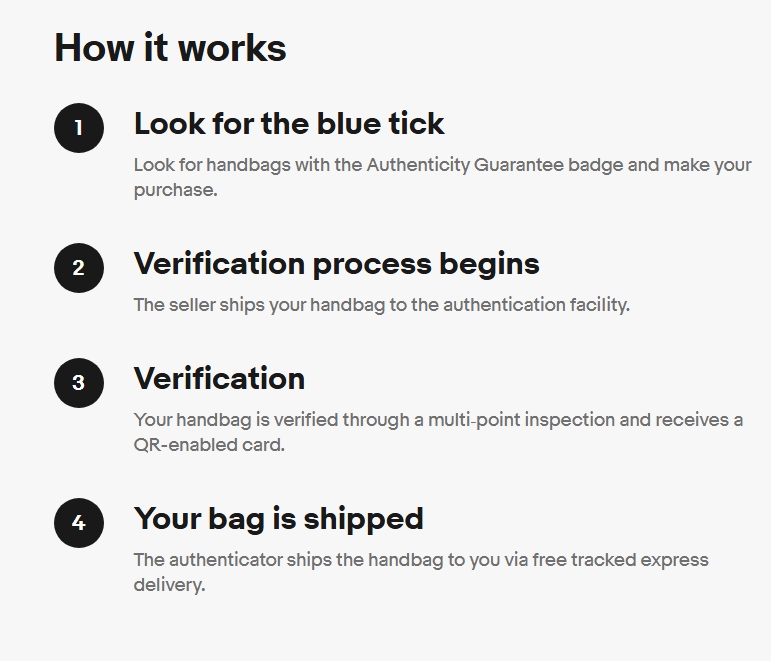
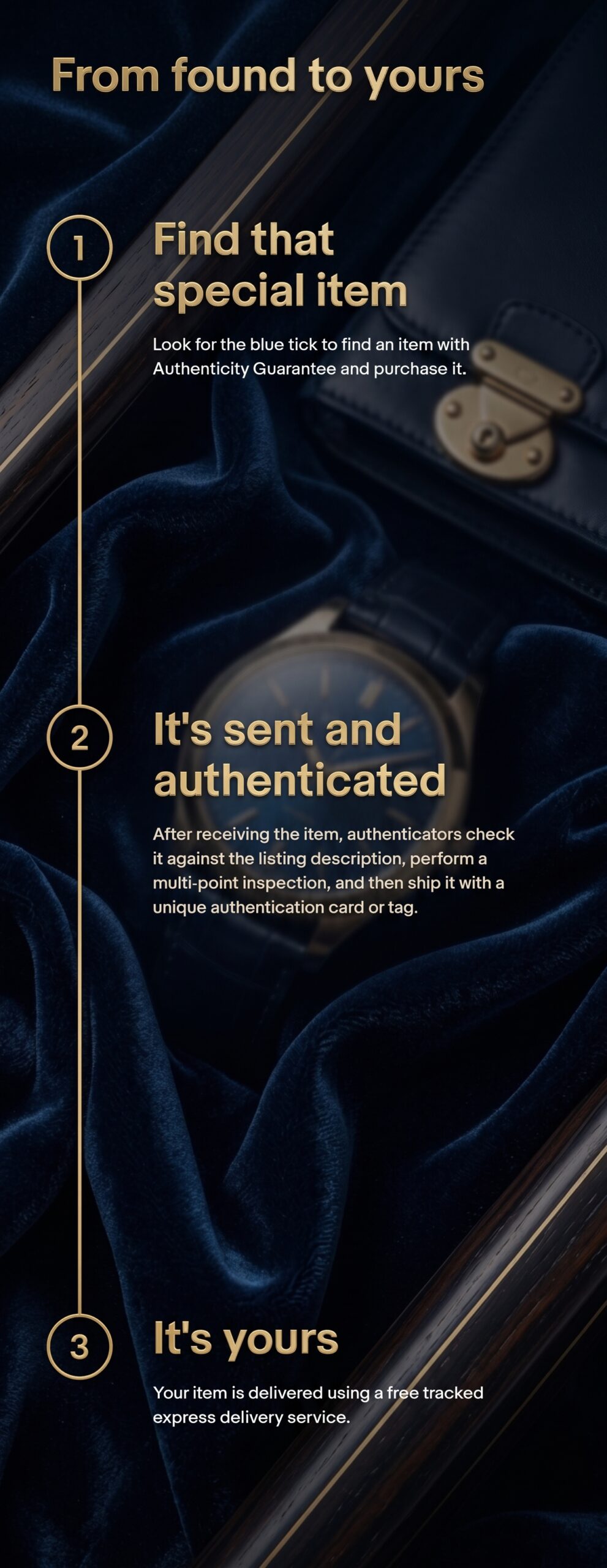
Strip away the jargon and the process comes down to four steps. This is the part most people skip over, but once you see it laid out, the whole thing stops feeling like a black box.
- Look for the blue tick. Only handbags carrying the Authenticity Guarantee badge are covered, so check for it before you buy. No badge means no authentication step, it’s just a normal listing.
- Verification kicks off. Once you’ve paid, the seller doesn’t ship to you. The handbag goes straight to eBay’s authentication facility, and this is where the protection actually starts.
- The bag gets verified. A trained authenticator runs it through a multi-point inspection covering hardware, stitching, materials, and serial numbers. If it passes, it’s sealed with a QR-enabled authenticity card you can scan yourself later.
- Your bag ships out. Only after it clears inspection does the authenticator send it on to you, via free tracked express delivery, so you can watch it move the whole way.
What I like about this flow is that you’re never the one deciding whether something looks off. The bag either clears the inspection or it doesn’t, and either way, the outcome is handled before it becomes your problem.
What Authenticators Actually Check
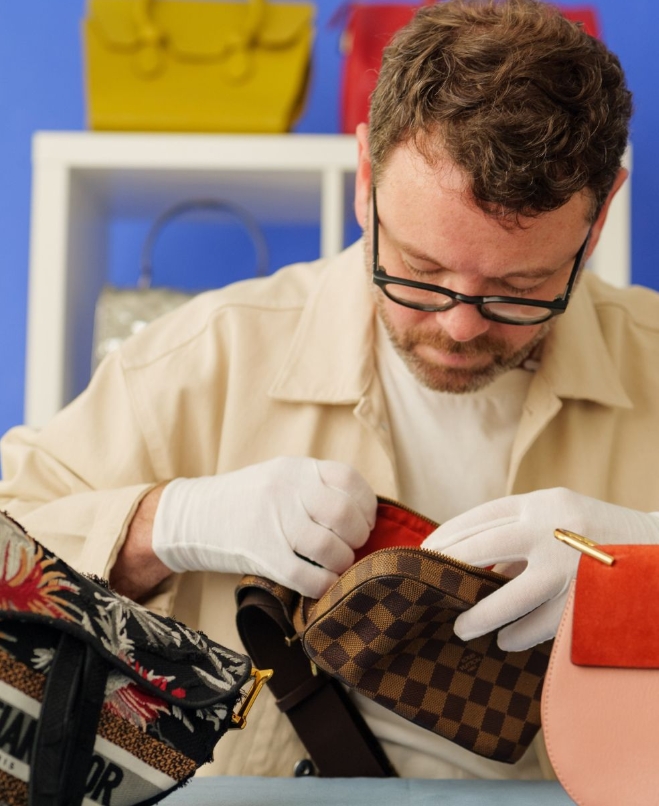
A common assumption is that authentication is basically someone glancing at the bag and nodding. It’s not close to that. Every brand has its own set of tells, and the authenticator is trained on them specifically, almost like they’re studying that brand’s design language rather than just eyeballing a logo.
When my first Chanel piece came back with its report, the checks covered things like the depth and symmetry of the quilting, the weight of the CC turn-lock, the exact font used on the authenticity card, the stitch count on the interior leather, whether the serial number format matched the production year, and how the hardware engraving lined up.
Dior gets checked differently, with focus on cannage stitching, hardware finish, logo placement, and interior branding. Louis Vuitton comes down to monogram alignment, date codes, the feel of the canvas, and how the handles are constructed. Different brand, different fingerprint, but the same level of scrutiny.
Which Items Qualify (and Which Don’t)
Not everything on eBay gets the authentication treatment. There are price and category rules attached. These shift a bit over time, but roughly:
- Handbags: Authentication generally applies above a certain price point, often around $500 USD or the local equivalent. Chanel, Dior, Louis Vuitton, and similar houses are usually covered.
- Jewellery: Fine and branded jewellery can qualify at lower price points, particularly from well-known luxury houses.
- Watches: Many luxury watches fall under the program, with their own criteria and inspection process.
Eligibility also depends on where the listing ships from. Some overseas listings won’t run through the Australian side of the program, and cheaper items generally miss the threshold altogether. The simplest way to check: if there’s no badge on the listing, treat it as unauthenticated and shop accordingly.
Where People Still Get Tripped Up
Even with the program running, a couple of things trip people up regularly. The first is assuming every luxury listing gets authenticated automatically. It doesn’t. Check for the badge every time, not just once with a seller you’ve bought from before.
The second is mixing up authenticity with condition. Authentication only confirms the bag is genuine. It says nothing about whether it matches the “excellent” or “like new” condition the listing promised. If a bag turns up more worn than expected, that’s a job for eBay’s standard buyer protection, not the authenticity program. They cover two different problems.
One thing I’ve noticed: sellers who opt into the program tend to write more careful, accurate listings in general. Knowing someone’s going to physically inspect the bag before it reaches you seems to weed out the sloppier sellers on its own.
The Brands Where This Matters Most
Some brands benefit far more from this than others, mostly because the counterfeit market around them is so aggressive. These are the ones I wouldn’t buy secondhand without an authentication step attached.
Chanel is the obvious one. The fakes out there are genuinely convincing, and even people who’ve bought designer for years get caught out. A Classic Flap is a purchase I simply wouldn’t make without it. It’s a big part of why I choose eBay over platforms that don’t offer a structured guarantee at all.
Dior sits in similar territory. The Lady Dior and the Book Tote get copied constantly, and the authenticated Dior listings on eBay are honestly some of the better value going in pre-loved luxury right now, pieces that retail well above $5,000 AUD, going for noticeably less, with the authentication step already sorted.
Louis Vuitton holds up well too, especially the classic monogram pieces. The resale market is strong, and authentication takes the guesswork out of buying older bags where date codes and wear patterns matter a lot.
Even Jimmy Choo has decent coverage under the program. It’s not the first brand people think of secondhand, but the resale market’s solid enough, and authentication gives you confidence when hunting down discontinued styles.
My Own Experience Using It
I’ve bought pre-loved designer through consignment stores, private sellers, and Instagram resellers over the years. Each has its own strengths, but this is the only route where the risk feels genuinely handled rather than just talked down.
The first time I used it, I checked the tracking more than I’d like to admit. The seller shipped the bag off, it landed at the authentication facility, and for a couple of days there was nothing to do but wait. Then the status flipped to “authenticated,” and honestly, that was more reassuring than any glowing seller review could have been. When the bag finally arrived, it had the QR-enabled card sealed inside the packaging, and scanning it pulled up the exact inspection details, which felt like the missing piece every previous pre-loved purchase had lacked.
That’s really the difference this program makes. It’s not that it guarantees you’ll love the bag or that the seller described it perfectly. It’s that the one thing you can never verify yourself, whether it’s actually real, gets checked by someone whose job is exactly that.
How I Size Up a Listing Before I Buy
Even with authentication as a safety net, I still don’t buy blind. I check the photos properly, close-ups of hardware, interior stamps, stitching, rather than just the hero shot. I look at whether the listing states the item’s condition clearly, including any marks or wear, and I compare that against the price being asked. A listing that’s vague about condition but very specific about the price is usually one to skip.
I also check whether the badge actually appears on the listing itself, not just in the category the item’s filed under. It sounds obvious, but it’s easy to assume coverage that isn’t there.
Reading Sellers Properly
Seller history tells you a lot. I look at how long they’ve been selling, what kind of items they usually list, and whether their feedback mentions accuracy of description rather than just shipping speed. A seller who’s clearly moved a lot of designer pieces before tends to describe condition more precisely, because they know buyers will notice if it doesn’t match.
I’m also a bit wary of sellers who list a huge volume of “brand new” luxury at prices well under retail. It’s not proof of anything on its own, but combined with a thin feedback history, it’s enough for me to be more careful, even with authentication in place.
Price, Resale, and Not Overpaying for “Safe”
One thing worth knowing: authenticated listings don’t automatically mean fair pricing. Some sellers price close to retail simply because the badge is there, assuming buyers will pay extra for the peace of mind. It’s worth checking recent sold listings for the same style and condition before committing, so you’re paying for the bag itself and not just the badge.
If resale value matters to you down the track, authenticated pieces also tend to hold their price better, since a future buyer can trust the same verification history. That’s one part of the cost that’s easy to overlook when you’re focused on the purchase price alone.
Where This Fits Into a Bigger Buying Strategy
The Authenticity Guarantee solves one specific problem, whether the item is real. It doesn’t replace doing your homework on condition, fair pricing, or which pieces are actually worth buying secondhand versus new. I treat it as one layer in a broader approach: use the badge to remove the fear of fakes, then apply the same judgement you’d use for any secondhand purchase on top of that.
For anyone building out a pre-loved collection over time, that combination of authenticated purchases plus careful listing evaluation is what actually keeps you from both fakes and bad deals.
My Honest Take
I don’t think the Authenticity Guarantee is flawless, but it’s the closest thing to genuine peace of mind I’ve found for buying designer secondhand online. It won’t catch every issue, condition disputes, slow sellers, and pricing still fall on you to manage, but the one risk that used to keep me up at night, buying a fake without knowing it, is essentially off the table.
If you’ve been avoiding pre-loved luxury because you don’t trust your own eye to spot a fake, this is exactly the gap it’s meant to close.
Affiliate Disclosure
Some links in this post are affiliate links. If you buy through them, I may earn a small commission at no extra cost to you. I only link to items and sellers I’d genuinely consider buying myself.
Hi, this is a comment.
To get started with moderating, editing, and deleting comments, please visit the Comments screen in the dashboard.
Commenter avatars come from Gravatar.